WMO and NOAA see elevated El Niño risks for 2026 – with potential consequences for droughts, heavy rainfall and global crop stress.
Advertisement/advertorial - This article is disseminated on behalf of Millennial Potash Corp., with which SRC swiss resource capital AG maintains paid IR advisory agreements · Publisher: SRC swiss resource capital AG · Author: Ingrid Heinritzi · First publication: June 13, 2026, 1:40 p.m. Zurich/Berlin time ·
The World Meteorological Organization sees a probability of around 80 percent for El Niño conditions in the period from June to August 2026. For the further period through at least November, the probabilities are close to or above 90 percent. The U.S. climate agency NOAA reported on June 11, 2026 that El Niño conditions were already present and could strengthen into the 2026/27 Northern Hemisphere winter. The extent of the regional impacts remains open. What is clear is that the climate phenomenon can favor weather extremes such as heat, heavy rainfall and droughts, thereby placing additional pressure on global agriculture. This is precisely why secure and sufficient food supply is moving back into sharper focus – and with it important plant nutrients such as potash.
The EU Commission is also responding to the increase in fertilizer costs. A support package of around EUR 500 million is planned to relieve particularly affected farmers. One focus is the sowing of winter crops. Many farmers already stocked up on fertilizer last autumn, but not all of them did. High fertilizer prices can lead farms to reconsider planting decisions or use land differently.
Potash-rich fertilizers are important for agriculture worldwide. Potassium supports central plant functions, including water regulation, root development, stress resistance and yield formation. With the world population growing and arable land per capita declining, the pressure to farm existing land more efficiently is increasing. At present, the Iran conflict, in connection with disruptions around the Strait of Hormuz, is putting pressure above all on energy, ammonia, urea and other fertilizers or fertilizer feedstocks. The World Bank expects significantly higher prices in the broader fertilizer sector in 2026; potassium chloride/MOP is also likely to trade higher year over year, but is less directly dependent on Middle East disruptions than nitrogen- and phosphate-based products. Canada remains the leading country among the most important potash producers. Africa also hosts promising potash deposits.
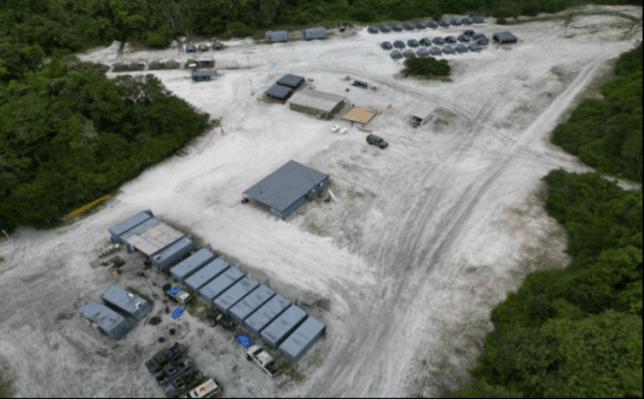
Millennial Potash - https://www.commodity-tv.com/ondemand/companies/profil/millennial-potash-corp/ - is developing Banio, a large potash project in Gabon, Africa. According to the company, the land position covers around 1,500 square kilometers and is located near the Atlantic coast. Gabon has a long history in natural resources as well as oil and gas. For the Banio project, proximity to Atlantic logistics is an important advantage: initial port and logistics infrastructure at Mayumba exists or is being expanded, while further capacity is being developed. For Brazil, a major potash consumer, Banio could prospectively represent a geographically favorable additional import source.
Another positive point is the support from the U.S. International Development Finance Corporation. The DFC has committed up to US$3 million in project development financing for the feasibility study of the Banio project. Solution mining is planned, which, compared with conventional underground mining, can potentially enable lower surface disturbance and lower initial capital expenditures. The actual environmental and social impacts are being assessed as part of the ongoing Environmental and Social Impact Assessment. The Definitive Feasibility Study and the Environmental and Social Impact Assessment are underway.
According to the company, Millennial Potash is funded for the ongoing feasibility study, the related work programs and the environmental assessment. The Phase 3 drill program was started in May 2026 and comprises four potash-specific drill holes totaling around 4,000 meters.
Current corporate information and news releases from Millennial Potash: (- https://www.resource-capital.ch/de/unternehmen/millennial-potash-corp/ -).
Sources: Millennial Potash; U.S. International Development Finance Corporation (DFC); World Meteorological Organization (WMO); NOAA Climate Prediction Center; World Bank; European Commission/Euronews; Natural Resources Canada; further sources mentioned in the text.
https://millennialpotash.com/news/millennial-potash-corp.-initiates-definitive-feasibility-study-with-us-dfc-funding-at-its-banio-potash-project-gabon; https://millennialpotash.com/news/millennial-announces-initiation-of-phase-3-drill-program-at-its-banio-potash-project;
https://www.dfc.gov/investment-story/investing-africas-first-potash-mine-reduce-dependence-russian-imports; https://wmo.int/news/media-centre/wmo-prepare-el-nino; https://www.cpc.ncep.noaa.gov/products/analysis_monitoring/enso_advisory/ensodisc.shtml;
https://blogs.worldbank.org/en/opendata/fertilizer-prices-surge-as-strait-of-hormuz-disruptions-tighten-; https://www.euronews.com/my-europe/2026/06/10/long-term-fertiliser-solutions-needed-to-avoid-eu-food-shortages-eu-agriculture-commission; https://natural-resources.canada.ca/minerals-mining/mining-data-statistics-analysis/minerals-metals-facts/potash-facts.
Pursuant to Section 85 WpHG in conjunction with Art. 20 MAR / Regulation (EU) 2016/958, we disclose that authors, employees or affiliated companies of Swiss Resource Capital AG (SRC) may hold positions (long/short) in the issuers discussed. Compensation/relationship: This publication is an advertisement/advertorial and is distributed within the framework of paid IR advisory agreements. Author’s own positions: none. SRC net position: below 0.5%. Issuer participation of at least 5% in SRC: no. Update policy: There is no obligation to update. The information refers to the time of preparation; subsequent developments may change the assessment.
Disclaimer: The information provided constitutes neither investment advice nor a solicitation to buy or sell securities. It is intended solely for information and advertising purposes. Securities transactions involve substantial risks; in particular, shares of exploration and development companies may involve the total loss of invested capital. All information and sources have been researched carefully to the best of our knowledge. However, no guarantee is given as to accuracy, completeness or timeliness. Forward-looking statements are based on current expectations, assumptions and plans and are subject to risks and uncertainties, particularly with regard to commodity prices, financing, permits, technical studies, construction and operating costs, political framework conditions, project development and capital market conditions. Actual results may differ materially. The operators of external websites to which links are provided are solely responsible for their content. No unlawful content was apparent at the time of linking. The disclaimer of Swiss Resource Capital AG also applies and is available at: https://www.resource-capital.ch/de/disclaimer-agb/
Advertisement/advertorial - This article is disseminated on behalf of Millennial Potash Corp., with which SRC swiss resource capital AG maintains paid IR advisory agreements · Publisher: SRC swiss resource capital AG · Author: Ingrid Heinritzi · First publication: June 13, 2026, 1:40 p.m. Zurich/Berlin time ·
The World Meteorological Organization sees a probability of around 80 percent for El Niño conditions in the period from June to August 2026. For the further period through at least November, the probabilities are close to or above 90 percent. The U.S. climate agency NOAA reported on June 11, 2026 that El Niño conditions were already present and could strengthen into the 2026/27 Northern Hemisphere winter. The extent of the regional impacts remains open. What is clear is that the climate phenomenon can favor weather extremes such as heat, heavy rainfall and droughts, thereby placing additional pressure on global agriculture. This is precisely why secure and sufficient food supply is moving back into sharper focus – and with it important plant nutrients such as potash.
The EU Commission is also responding to the increase in fertilizer costs. A support package of around EUR 500 million is planned to relieve particularly affected farmers. One focus is the sowing of winter crops. Many farmers already stocked up on fertilizer last autumn, but not all of them did. High fertilizer prices can lead farms to reconsider planting decisions or use land differently.
Potash-rich fertilizers are important for agriculture worldwide. Potassium supports central plant functions, including water regulation, root development, stress resistance and yield formation. With the world population growing and arable land per capita declining, the pressure to farm existing land more efficiently is increasing. At present, the Iran conflict, in connection with disruptions around the Strait of Hormuz, is putting pressure above all on energy, ammonia, urea and other fertilizers or fertilizer feedstocks. The World Bank expects significantly higher prices in the broader fertilizer sector in 2026; potassium chloride/MOP is also likely to trade higher year over year, but is less directly dependent on Middle East disruptions than nitrogen- and phosphate-based products. Canada remains the leading country among the most important potash producers. Africa also hosts promising potash deposits.
Millennial Potash - https://www.commodity-tv.com/ondemand/companies/profil/millennial-potash-corp/ - is developing Banio, a large potash project in Gabon, Africa. According to the company, the land position covers around 1,500 square kilometers and is located near the Atlantic coast. Gabon has a long history in natural resources as well as oil and gas. For the Banio project, proximity to Atlantic logistics is an important advantage: initial port and logistics infrastructure at Mayumba exists or is being expanded, while further capacity is being developed. For Brazil, a major potash consumer, Banio could prospectively represent a geographically favorable additional import source.
Another positive point is the support from the U.S. International Development Finance Corporation. The DFC has committed up to US$3 million in project development financing for the feasibility study of the Banio project. Solution mining is planned, which, compared with conventional underground mining, can potentially enable lower surface disturbance and lower initial capital expenditures. The actual environmental and social impacts are being assessed as part of the ongoing Environmental and Social Impact Assessment. The Definitive Feasibility Study and the Environmental and Social Impact Assessment are underway.
According to the company, Millennial Potash is funded for the ongoing feasibility study, the related work programs and the environmental assessment. The Phase 3 drill program was started in May 2026 and comprises four potash-specific drill holes totaling around 4,000 meters.
Current corporate information and news releases from Millennial Potash: (- https://www.resource-capital.ch/de/unternehmen/millennial-potash-corp/ -).
Sources: Millennial Potash; U.S. International Development Finance Corporation (DFC); World Meteorological Organization (WMO); NOAA Climate Prediction Center; World Bank; European Commission/Euronews; Natural Resources Canada; further sources mentioned in the text.
https://millennialpotash.com/news/millennial-potash-corp.-initiates-definitive-feasibility-study-with-us-dfc-funding-at-its-banio-potash-project-gabon; https://millennialpotash.com/news/millennial-announces-initiation-of-phase-3-drill-program-at-its-banio-potash-project;
https://www.dfc.gov/investment-story/investing-africas-first-potash-mine-reduce-dependence-russian-imports; https://wmo.int/news/media-centre/wmo-prepare-el-nino; https://www.cpc.ncep.noaa.gov/products/analysis_monitoring/enso_advisory/ensodisc.shtml;
https://blogs.worldbank.org/en/opendata/fertilizer-prices-surge-as-strait-of-hormuz-disruptions-tighten-; https://www.euronews.com/my-europe/2026/06/10/long-term-fertiliser-solutions-needed-to-avoid-eu-food-shortages-eu-agriculture-commission; https://natural-resources.canada.ca/minerals-mining/mining-data-statistics-analysis/minerals-metals-facts/potash-facts.
Pursuant to Section 85 WpHG in conjunction with Art. 20 MAR / Regulation (EU) 2016/958, we disclose that authors, employees or affiliated companies of Swiss Resource Capital AG (SRC) may hold positions (long/short) in the issuers discussed. Compensation/relationship: This publication is an advertisement/advertorial and is distributed within the framework of paid IR advisory agreements. Author’s own positions: none. SRC net position: below 0.5%. Issuer participation of at least 5% in SRC: no. Update policy: There is no obligation to update. The information refers to the time of preparation; subsequent developments may change the assessment.
Disclaimer: The information provided constitutes neither investment advice nor a solicitation to buy or sell securities. It is intended solely for information and advertising purposes. Securities transactions involve substantial risks; in particular, shares of exploration and development companies may involve the total loss of invested capital. All information and sources have been researched carefully to the best of our knowledge. However, no guarantee is given as to accuracy, completeness or timeliness. Forward-looking statements are based on current expectations, assumptions and plans and are subject to risks and uncertainties, particularly with regard to commodity prices, financing, permits, technical studies, construction and operating costs, political framework conditions, project development and capital market conditions. Actual results may differ materially. The operators of external websites to which links are provided are solely responsible for their content. No unlawful content was apparent at the time of linking. The disclaimer of Swiss Resource Capital AG also applies and is available at: https://www.resource-capital.ch/de/disclaimer-agb/

|
Herr Jörg Schulte Geschäftsführer info@js-research.de |
|
|
|
Kommentare
Kontakt
|
|
Herr Jörg Schulte Geschäftsführer info@js-research.de |
|
|
|
Das könnte Sie auch interessieren:
Kaufmännisches Projektmanagement
Von Narr Francke Attempto Verlag
Eingebettet in die Projektstory sind mehr als 20 Tutorials/Wissenseinheiten, die alle wichtigen kaufmännischen Aufgaben fachkundig erläutern.Sechs Expert:innen aus dem deutschen Infrastruktur- und Anlagenbau beschreiben anschaulich und praxisfundiert, was kaufmännische Projektleiter:innen alles tun müssen, um das Investitionsprojekt zum Erfolg zu führen. ... | mehr

Deutsche Bank: Copper Outpaces Gold in Terms of Price Potential
Von Swiss Resource Capital AG
Advertisement – On behalf of OR Royalties Inc. and Gold Royalty Corp. SRC swiss resource capital AG has fee-based, non-performance-based IR consulting agreements with both companies · Prepared by: SRC swiss resource capital AG · Author: Ingrid Heinritzi · First ... | mehr

Deutsche Bank: Kupfer vor Gold beim Kurspotenzial
Von Swiss Resource Capital AG
Anzeige/Werbung – Im Auftrag von OR Royalties Inc. und Gold Royalty Corp. SRC swiss resource capital AG unterhält mit beiden entgeltliche, erfolgsunabhängige IR-Beraterverträge · Ersteller: SRC swiss resource capital AG · Autorin: Ingrid Heinritzi · Erstveröffentlichung: 12.10.2026, 5:30 Uhr Berlin/Zürich · Knappheit stützt ... | mehr