China is driving reactor construction, while new uranium supply is slow to reach the market. Uranium Energy is expanding U.S. production, while Uranium Royalty is strengthening its platform through Sweetwater.
Third-Party Recommendation (Art. 8 DelVO 2016/958): Unmodified reproduction of a promotional article created by a third party · Original author: SRC swiss resource capital AG · First publication (original): August 19, 2026, 5:33 a.m. Berlin/Zurich · Link to the original publication ·
Advertisement/Paid Promotion – This article is distributed on behalf of Uranium Energy Corp. and Uranium Royalty Corp.
SRC swiss resource capital AG (SRC) maintains paid IR consulting agreements with both issuers; compensation is not performance-based. Author: freelance journalist. First published: 19 August 2026, 5:33 a.m. (Europe/Berlin).
Dear Readers,
The nuclear power renaissance is now far more than a political statement of intent. As of the end of July 2026, according to the International Atomic Energy Agency's PRIS reactor database, 417 nuclear reactors were in operation worldwide, with another 77 under construction. China is setting the pace: 60 reactors are already in operation, while another 37 are under construction. At the same time, global nuclear electricity generation reached a new record in 2025, according to the International Energy Agency.
This increasingly shifts attention to another part of the value chain: Where will the additional uranium come from?
The World Nuclear Association puts global reactor uranium requirements for 2025 at around 68,920 tonnes of uranium. Under its reference scenario, requirements could rise to more than 150,000 tonnes by 2040. At the same time, the OECD Nuclear Energy Agency and the IAEA point out that new uranium production centers require substantial investment, permitting and long lead times.
It is precisely this timing mismatch between an expanding reactor fleet and uranium supply that can respond only slowly that makes existing, permitted and near-term scalable platforms strategically interesting. This brings two very different business models into focus.
Uranium Energy: U.S. Production Is Back!
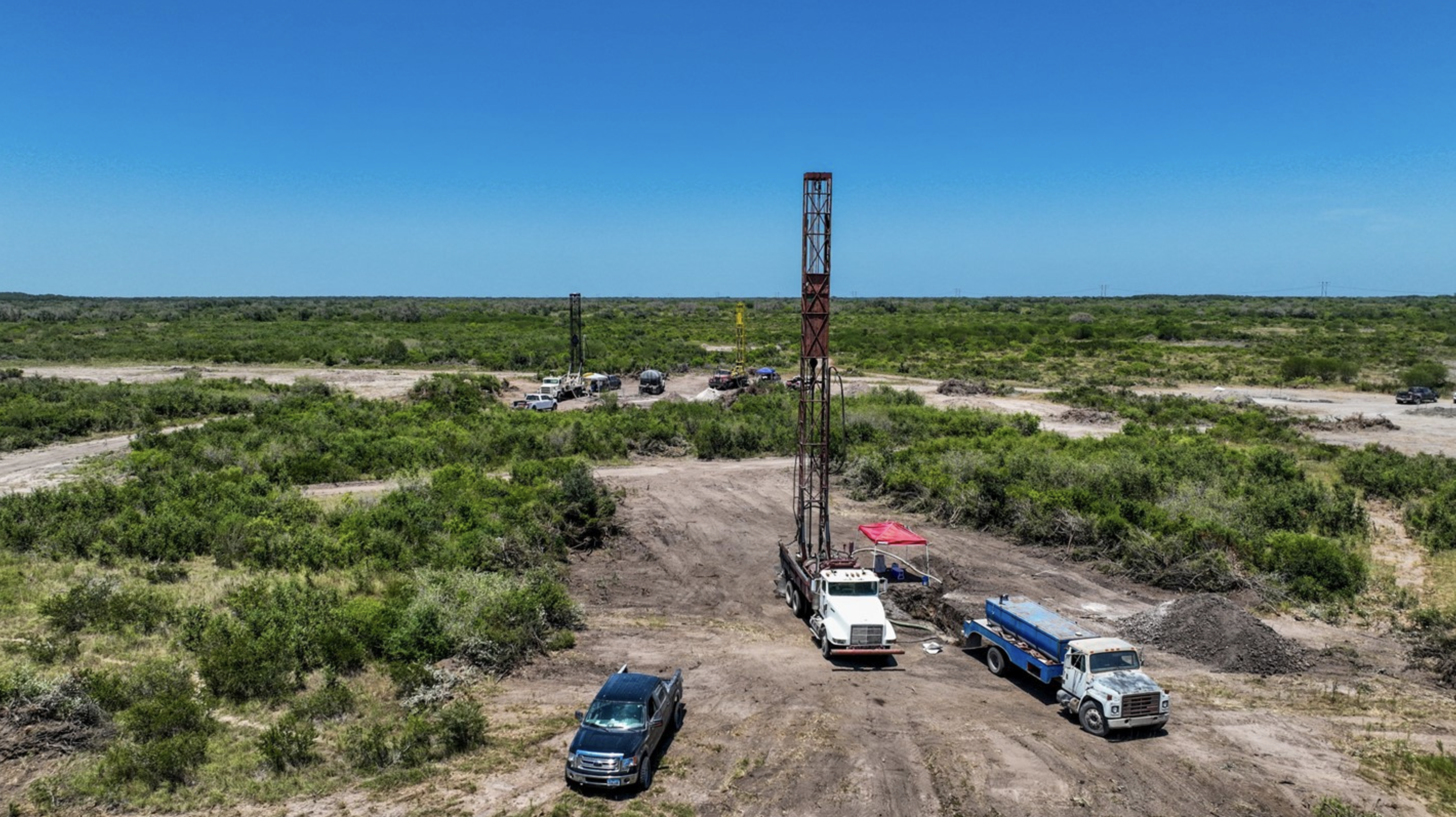
Uranium Energy Corp. (WKN: A0JDRR) – https://www.commodity-tv.com/play/uranium-energy-update-on-q3-results-burke-hollow-finally-in-production/ – reached an important operational milestone in 2026. Since commencing production at Burke Hollow in South Texas on April 8, the company has been operating two of its three U.S. hub-and-spoke ISR production platforms.
In parallel, additional production capacity is being developed at Christensen Ranch in Wyoming. Additional so-called header houses are being commissioned or constructed.
This gives Uranium Energy (UEC) an operating footprint precisely in the market where Washington is increasingly seeking to strengthen the domestic nuclear supply chain. According to the company, UEC has the largest uranium resource base and the highest permitted production capacity in the United States.
However, the size of the project pipeline is not the only decisive factor.
USD 794 Million in Liquid Assets – and No Debt
As of April 30, 2026, Uranium Energy had approximately USD 794 million in liquid assets and no debt. In addition, it held 1.456 million pounds of U₃O₈ in strategic uranium inventory, on top of its operating production inventory.
This combination is notable for a resource company: production, a large liquidity reserve, uranium inventory and no debt give UEC considerable financial flexibility to manage the production ramp-up in stages.
As a result, the company is not necessarily forced to sell every unit produced immediately simply to meet short-term funding needs. In a volatile uranium market, this flexibility can be strategically valuable.
The Next Step: From the Mine to the Nuclear Fuel Cycle
UEC is now looking beyond uranium mining alone. Through its subsidiary United States Uranium Refining & Conversion Corp., the company is pursuing the development of domestic U.S. refining and conversion capacity.
The planned conversion facility is not yet operational. In 2026, however, the assignment of an NRC docket number marked a first regulatory milestone. Site selection, engineering, licensing and further development work are ongoing. This addresses a particularly sensitive segment of the U.S. nuclear fuel supply chain.
If UEC succeeds in establishing additional processing steps in the United States alongside uranium production, it would significantly broaden its position within the domestic nuclear supply chain.
Uranium Royalty: Sweetwater Reshapes the Business Model!

While Uranium Energy focuses on production and vertical integration, Uranium Royalty Corp. (WKN: A2PV0Z) – https://www.commodity-tv.com/play/merger-news-from-uranium-royalty-and-equinox-gold/ – pursues a more capital-light approach. Here too, 2026 has brought substantial change.
On July 27, 2026, the Sweetwater transaction was completed. The existing uranium royalty business was combined with the Sweetwater assets under a newly formed U.S. parent company, also named Uranium Royalty Corp. The new shares have traded on the Nasdaq since July 28.
This transformed the originally strongly uranium-focused royalty platform into a significantly broader royalty, land and mineral rights company.
850,000 Acres of Surface Rights – 4.5 Million Acres of Mineral Rights
Sweetwater contributes an existing cash-flow-generating royalty portfolio as well as extensive land and mineral rights in Wyoming, Utah and Colorado. According to the company, New URC now owns approximately 850,000 acres of surface rights and approximately 4.5 million acres of mineral rights.
According to the company, this makes it the largest publicly traded corporate landowner in Wyoming and, excluding REITs, the second-largest in the United States. A material portion of the newly acquired assets is associated with trona, or soda ash. At the same time, the extensive land and mineral rights provide additional optionality for uranium and other commodities. This changes the risk profile: uranium remains important, but now rests on a broader asset and cash flow base.
Uranium Remains the Strategic Core
Despite Sweetwater, uranium exposure remains a central component of the business model. URC continues to have royalty exposure to major uranium projects and mines such as McArthur River and Cigar Lake, as well as additional royalties, streams and strategic uranium investments.
For investors, this creates a different type of exposure than that offered by a conventional producer. URC does not have to build and operate mines itself, but its royalty interests depend on the production, permitting, investment decisions and operating development of the respective operators. Not every royalty is currently generating cash flow.
However, the combination of uranium price exposure, existing royalty rights, new cash flow and an exceptionally large land position could broaden the financial base for further acquisitions.
Two Business Models – the Same Structural Driver
UEC and URC could hardly be more different. Uranium Energy is ramping up actual U.S. uranium production, has substantial liquidity and is pursuing the development of additional stages of the domestic nuclear fuel cycle.
Uranium Royalty is pursuing a more capital-light royalty and land model that, since the Sweetwater transaction, has a broader asset and cash flow base.
Yet both investment theses ultimately rest on the same structural point:
The nuclear reactor fleet is expanding faster than new uranium and fuel-cycle capacity can be brought online in the near term.
China, with 37 reactors currently under construction, provides the clearest visible evidence of this. At the same time, new uranium mines, processing facilities and fuel-cycle capacity often require many years from planning to operation.
Existing production platforms, permitted capacity, strategic uranium inventories and royalty exposure could therefore become increasingly important.
Conclusion: Two Ways to Gain Exposure to the New Uranium Cycle
The uranium market is increasingly evolving from a pure commodity story into a strategic supply story.
For Uranium Energy, this creates the opportunity to continue ramping up its existing U.S. production platform while also expanding its position within the domestic nuclear fuel cycle. USD 794 million in liquid assets, no debt, two active ISR platforms and strategic uranium inventories provide an unusually strong starting position.
Uranium Royalty is taking a different route. Through Sweetwater, a focused uranium royalty platform has become a broader royalty, land and mineral rights company, combining its uranium exposure with additional cash flows and an exceptionally large U.S. land position.
For both companies, the key driver remains the same: if global nuclear power capacity continues to increase while new uranium supply and fuel-cycle capacity come online only slowly, the strategic importance of existing and scalable uranium platforms is likely to increase further.
Whether this translates into sustainably higher company valuations, however, will not be determined by the uranium price alone. For UEC, the key factors are production ramp-up, costs, permitting and execution of the fuel-cycle strategy. For URC, they are royalty cash flows, development of the underlying projects, capital allocation and successful integration of the Sweetwater assets.
These clearly differentiated business models are precisely what make both companies interesting within the same structural uranium trend.
Kind regards,
Marc Ollinger
Swiss Resource Capital AG
The freelance journalist holds no shares in UEC or URC and no warrants, options, other derivatives or short positions. SRC's net positions in the issuers discussed are each below 0.5%; SRC holds no short positions, warrants, options or other derivatives in UEC or URC. Apart from the disclosed IR agreements, there are no market-making, liquidity-provider, investment banking, lead/co-lead manager or other advisory relationships with UEC or URC. The issuers hold no interest in SRC. The article was not submitted to the management teams for factual review prior to publication.
Sources and Status
Editorial review date: 18 August 2026. Primary and industry sources: IAEA Power Reactor Information System (PRIS), data through the end of July 2026; IEA Global Energy Review 2026; OECD-NEA/IAEA “Uranium 2024: Resources, Production and Demand”; World Nuclear Association, World Nuclear Fuel Report 2025; Uranium Energy Corp., Q3 Fiscal 2026 Results dated June 9, 2026, as well as company releases dated April 8, 2026 and March 23, 2026; Uranium Royalty Corp., completion of the Sweetwater transaction dated July 27, 2026. Company news was re-checked on August 18, 2026 to confirm that it remained current. Intro-Picture: Uranium Energy Corp.
Legal Notices, Conflicts of Interest and Disclaimer
Advertising / paid relationship: This publication is a paid marketing communication/advertorial and is distributed on behalf of Uranium Energy Corp. (UEC) and Uranium Royalty Corp. (URC). SRC swiss resource capital AG maintains paid IR consulting agreements with both issuers; compensation is not performance-based. This publication is not independent financial research. The article was not submitted to the management teams of UEC and URC for factual review prior to publication.
Interests and conflicts of interest: The following information is provided as a precautionary transparency measure regarding interests and relationships, particularly with respect to Article 20 of Regulation (EU) No 596/2014 on market abuse (Market Abuse Regulation – MAR), Commission Delegated Regulation (EU) 2016/958 and relevant German Securities Trading Act (WpHG) requirements, insofar as they apply to this publication. The freelance journalist holds no shares in UEC or URC. Neither the freelance journalist nor SRC holds short positions, warrants, options or other derivatives in UEC or URC. SRC's net positions in the issuers discussed are each below 0.5%. UEC and URC hold no interest in SRC. Apart from the disclosed IR agreements, based on the information available, there are no market-making, liquidity-provider, investment banking, lead/co-lead manager or other advisory relationships between SRC and UEC or URC. Compensation under the IR agreements is not contingent on the performance of the shares or any particular share-price development.
No investment advice / speculative investment: The content is provided solely for information and advertising purposes. It does not constitute investment advice or a personal recommendation, an offer, solicitation or invitation to buy, sell or hold securities. Shares in resource, development and royalty companies may be subject to significant share-price, liquidity, commodity-price, project, financing, currency, political and regulatory risks. A substantial loss, up to and including the total loss of the capital invested, is possible.
Forward-looking statements: This publication contains forward-looking statements, including statements regarding the development of the nuclear power and uranium markets, uranium demand and supply, UEC's production ramp-up and expansion plans, permitting, siting and development work for refining and conversion, as well as expected benefits, cash flows, growth options and acquisitions in connection with URC and the Sweetwater assets. Such statements are based on current expectations, assumptions and plans and involve known and unknown risks and uncertainties. Actual results may differ materially. There can be no assurance that announced production rates, permits, development targets, market forecasts, synergies, cash flows or other expectations will be achieved.
Technical and company-related information: Project, production, resource, royalty and transaction information was taken from public announcements, reports and regulatory filings of the respective issuers or from the sources cited therein. SRC and the freelance journalist have not prepared their own mineral resource or mineral reserve estimates and have not independently verified the technical information. For royalty interests, economic performance depends materially on the respective project operators, permitting and production decisions.
Research, sources and liability: The content was prepared on the basis of sources considered reliable at the time of preparation. Despite careful research, errors, omissions, subsequent changes or differing interpretations cannot be excluded. No representation or warranty is made as to accuracy, completeness, timeliness or fitness for a particular purpose. Liability is excluded to the extent permitted by law. In particular, liability for willful misconduct and gross negligence, for death, personal injury or damage to health, and for other mandatory statutory liabilities remains unaffected.
Use of AI-assisted systems: AI-assisted systems may be used as editorial tools in the preparation and editing process, in particular to support research, analysis, structuring and linguistic revision. All content intended for publication is subject to substantive human and editorial review prior to publication, revised where necessary, and approved by the responsible editorial team. Editorial responsibility remains fully with the respective publisher.
In addition, the disclaimer of Swiss Resource Capital AG applies.
Third-Party Recommendation (Art. 8 DelVO 2016/958): Unmodified reproduction of a promotional article created by a third party · Original author: SRC swiss resource capital AG · First publication (original): August 19, 2026, 5:33 a.m. Berlin/Zurich · Link to the original publication ·
Advertisement/Paid Promotion – This article is distributed on behalf of Uranium Energy Corp. and Uranium Royalty Corp.
SRC swiss resource capital AG (SRC) maintains paid IR consulting agreements with both issuers; compensation is not performance-based. Author: freelance journalist. First published: 19 August 2026, 5:33 a.m. (Europe/Berlin).
Dear Readers,
The nuclear power renaissance is now far more than a political statement of intent. As of the end of July 2026, according to the International Atomic Energy Agency's PRIS reactor database, 417 nuclear reactors were in operation worldwide, with another 77 under construction. China is setting the pace: 60 reactors are already in operation, while another 37 are under construction. At the same time, global nuclear electricity generation reached a new record in 2025, according to the International Energy Agency.
This increasingly shifts attention to another part of the value chain: Where will the additional uranium come from?
The World Nuclear Association puts global reactor uranium requirements for 2025 at around 68,920 tonnes of uranium. Under its reference scenario, requirements could rise to more than 150,000 tonnes by 2040. At the same time, the OECD Nuclear Energy Agency and the IAEA point out that new uranium production centers require substantial investment, permitting and long lead times.
It is precisely this timing mismatch between an expanding reactor fleet and uranium supply that can respond only slowly that makes existing, permitted and near-term scalable platforms strategically interesting. This brings two very different business models into focus.
Uranium Energy: U.S. Production Is Back!
Uranium Energy Corp. (WKN: A0JDRR) – https://www.commodity-tv.com/play/uranium-energy-update-on-q3-results-burke-hollow-finally-in-production/ – reached an important operational milestone in 2026. Since commencing production at Burke Hollow in South Texas on April 8, the company has been operating two of its three U.S. hub-and-spoke ISR production platforms.
In parallel, additional production capacity is being developed at Christensen Ranch in Wyoming. Additional so-called header houses are being commissioned or constructed.
This gives Uranium Energy (UEC) an operating footprint precisely in the market where Washington is increasingly seeking to strengthen the domestic nuclear supply chain. According to the company, UEC has the largest uranium resource base and the highest permitted production capacity in the United States.
However, the size of the project pipeline is not the only decisive factor.
USD 794 Million in Liquid Assets – and No Debt
As of April 30, 2026, Uranium Energy had approximately USD 794 million in liquid assets and no debt. In addition, it held 1.456 million pounds of U₃O₈ in strategic uranium inventory, on top of its operating production inventory.
This combination is notable for a resource company: production, a large liquidity reserve, uranium inventory and no debt give UEC considerable financial flexibility to manage the production ramp-up in stages.
As a result, the company is not necessarily forced to sell every unit produced immediately simply to meet short-term funding needs. In a volatile uranium market, this flexibility can be strategically valuable.
The Next Step: From the Mine to the Nuclear Fuel Cycle
UEC is now looking beyond uranium mining alone. Through its subsidiary United States Uranium Refining & Conversion Corp., the company is pursuing the development of domestic U.S. refining and conversion capacity.
The planned conversion facility is not yet operational. In 2026, however, the assignment of an NRC docket number marked a first regulatory milestone. Site selection, engineering, licensing and further development work are ongoing. This addresses a particularly sensitive segment of the U.S. nuclear fuel supply chain.
If UEC succeeds in establishing additional processing steps in the United States alongside uranium production, it would significantly broaden its position within the domestic nuclear supply chain.
Uranium Royalty: Sweetwater Reshapes the Business Model!
While Uranium Energy focuses on production and vertical integration, Uranium Royalty Corp. (WKN: A2PV0Z) – https://www.commodity-tv.com/play/merger-news-from-uranium-royalty-and-equinox-gold/ – pursues a more capital-light approach. Here too, 2026 has brought substantial change.
On July 27, 2026, the Sweetwater transaction was completed. The existing uranium royalty business was combined with the Sweetwater assets under a newly formed U.S. parent company, also named Uranium Royalty Corp. The new shares have traded on the Nasdaq since July 28.
This transformed the originally strongly uranium-focused royalty platform into a significantly broader royalty, land and mineral rights company.
850,000 Acres of Surface Rights – 4.5 Million Acres of Mineral Rights
Sweetwater contributes an existing cash-flow-generating royalty portfolio as well as extensive land and mineral rights in Wyoming, Utah and Colorado. According to the company, New URC now owns approximately 850,000 acres of surface rights and approximately 4.5 million acres of mineral rights.
According to the company, this makes it the largest publicly traded corporate landowner in Wyoming and, excluding REITs, the second-largest in the United States. A material portion of the newly acquired assets is associated with trona, or soda ash. At the same time, the extensive land and mineral rights provide additional optionality for uranium and other commodities. This changes the risk profile: uranium remains important, but now rests on a broader asset and cash flow base.
Uranium Remains the Strategic Core
Despite Sweetwater, uranium exposure remains a central component of the business model. URC continues to have royalty exposure to major uranium projects and mines such as McArthur River and Cigar Lake, as well as additional royalties, streams and strategic uranium investments.
For investors, this creates a different type of exposure than that offered by a conventional producer. URC does not have to build and operate mines itself, but its royalty interests depend on the production, permitting, investment decisions and operating development of the respective operators. Not every royalty is currently generating cash flow.
However, the combination of uranium price exposure, existing royalty rights, new cash flow and an exceptionally large land position could broaden the financial base for further acquisitions.
Two Business Models – the Same Structural Driver
UEC and URC could hardly be more different. Uranium Energy is ramping up actual U.S. uranium production, has substantial liquidity and is pursuing the development of additional stages of the domestic nuclear fuel cycle.
Uranium Royalty is pursuing a more capital-light royalty and land model that, since the Sweetwater transaction, has a broader asset and cash flow base.
Yet both investment theses ultimately rest on the same structural point:
The nuclear reactor fleet is expanding faster than new uranium and fuel-cycle capacity can be brought online in the near term.
China, with 37 reactors currently under construction, provides the clearest visible evidence of this. At the same time, new uranium mines, processing facilities and fuel-cycle capacity often require many years from planning to operation.
Existing production platforms, permitted capacity, strategic uranium inventories and royalty exposure could therefore become increasingly important.
Conclusion: Two Ways to Gain Exposure to the New Uranium Cycle
The uranium market is increasingly evolving from a pure commodity story into a strategic supply story.
For Uranium Energy, this creates the opportunity to continue ramping up its existing U.S. production platform while also expanding its position within the domestic nuclear fuel cycle. USD 794 million in liquid assets, no debt, two active ISR platforms and strategic uranium inventories provide an unusually strong starting position.
Uranium Royalty is taking a different route. Through Sweetwater, a focused uranium royalty platform has become a broader royalty, land and mineral rights company, combining its uranium exposure with additional cash flows and an exceptionally large U.S. land position.
For both companies, the key driver remains the same: if global nuclear power capacity continues to increase while new uranium supply and fuel-cycle capacity come online only slowly, the strategic importance of existing and scalable uranium platforms is likely to increase further.
Whether this translates into sustainably higher company valuations, however, will not be determined by the uranium price alone. For UEC, the key factors are production ramp-up, costs, permitting and execution of the fuel-cycle strategy. For URC, they are royalty cash flows, development of the underlying projects, capital allocation and successful integration of the Sweetwater assets.
These clearly differentiated business models are precisely what make both companies interesting within the same structural uranium trend.
Kind regards,
Marc Ollinger
Swiss Resource Capital AG
The freelance journalist holds no shares in UEC or URC and no warrants, options, other derivatives or short positions. SRC's net positions in the issuers discussed are each below 0.5%; SRC holds no short positions, warrants, options or other derivatives in UEC or URC. Apart from the disclosed IR agreements, there are no market-making, liquidity-provider, investment banking, lead/co-lead manager or other advisory relationships with UEC or URC. The issuers hold no interest in SRC. The article was not submitted to the management teams for factual review prior to publication.
Sources and Status
Editorial review date: 18 August 2026. Primary and industry sources: IAEA Power Reactor Information System (PRIS), data through the end of July 2026; IEA Global Energy Review 2026; OECD-NEA/IAEA “Uranium 2024: Resources, Production and Demand”; World Nuclear Association, World Nuclear Fuel Report 2025; Uranium Energy Corp., Q3 Fiscal 2026 Results dated June 9, 2026, as well as company releases dated April 8, 2026 and March 23, 2026; Uranium Royalty Corp., completion of the Sweetwater transaction dated July 27, 2026. Company news was re-checked on August 18, 2026 to confirm that it remained current. Intro-Picture: Uranium Energy Corp.
Legal Notices, Conflicts of Interest and Disclaimer
Advertising / paid relationship: This publication is a paid marketing communication/advertorial and is distributed on behalf of Uranium Energy Corp. (UEC) and Uranium Royalty Corp. (URC). SRC swiss resource capital AG maintains paid IR consulting agreements with both issuers; compensation is not performance-based. This publication is not independent financial research. The article was not submitted to the management teams of UEC and URC for factual review prior to publication.
Interests and conflicts of interest: The following information is provided as a precautionary transparency measure regarding interests and relationships, particularly with respect to Article 20 of Regulation (EU) No 596/2014 on market abuse (Market Abuse Regulation – MAR), Commission Delegated Regulation (EU) 2016/958 and relevant German Securities Trading Act (WpHG) requirements, insofar as they apply to this publication. The freelance journalist holds no shares in UEC or URC. Neither the freelance journalist nor SRC holds short positions, warrants, options or other derivatives in UEC or URC. SRC's net positions in the issuers discussed are each below 0.5%. UEC and URC hold no interest in SRC. Apart from the disclosed IR agreements, based on the information available, there are no market-making, liquidity-provider, investment banking, lead/co-lead manager or other advisory relationships between SRC and UEC or URC. Compensation under the IR agreements is not contingent on the performance of the shares or any particular share-price development.
No investment advice / speculative investment: The content is provided solely for information and advertising purposes. It does not constitute investment advice or a personal recommendation, an offer, solicitation or invitation to buy, sell or hold securities. Shares in resource, development and royalty companies may be subject to significant share-price, liquidity, commodity-price, project, financing, currency, political and regulatory risks. A substantial loss, up to and including the total loss of the capital invested, is possible.
Forward-looking statements: This publication contains forward-looking statements, including statements regarding the development of the nuclear power and uranium markets, uranium demand and supply, UEC's production ramp-up and expansion plans, permitting, siting and development work for refining and conversion, as well as expected benefits, cash flows, growth options and acquisitions in connection with URC and the Sweetwater assets. Such statements are based on current expectations, assumptions and plans and involve known and unknown risks and uncertainties. Actual results may differ materially. There can be no assurance that announced production rates, permits, development targets, market forecasts, synergies, cash flows or other expectations will be achieved.
Technical and company-related information: Project, production, resource, royalty and transaction information was taken from public announcements, reports and regulatory filings of the respective issuers or from the sources cited therein. SRC and the freelance journalist have not prepared their own mineral resource or mineral reserve estimates and have not independently verified the technical information. For royalty interests, economic performance depends materially on the respective project operators, permitting and production decisions.
Research, sources and liability: The content was prepared on the basis of sources considered reliable at the time of preparation. Despite careful research, errors, omissions, subsequent changes or differing interpretations cannot be excluded. No representation or warranty is made as to accuracy, completeness, timeliness or fitness for a particular purpose. Liability is excluded to the extent permitted by law. In particular, liability for willful misconduct and gross negligence, for death, personal injury or damage to health, and for other mandatory statutory liabilities remains unaffected.
Use of AI-assisted systems: AI-assisted systems may be used as editorial tools in the preparation and editing process, in particular to support research, analysis, structuring and linguistic revision. All content intended for publication is subject to substantive human and editorial review prior to publication, revised where necessary, and approved by the responsible editorial team. Editorial responsibility remains fully with the respective publisher.
In addition, the disclaimer of Swiss Resource Capital AG applies.

|
Herr Jörg Schulte Geschäftsführer info@js-research.de |
|
|
|
Kommentare
Kontakt
|
|
Herr Jörg Schulte Geschäftsführer info@js-research.de |
|
|
|
Das könnte Sie auch interessieren:
Space Missions: Nuclear Technology Provides Energy Beyond the Sun
Von Swiss Resource Capital AG
Advertisement – On behalf of Uranium Energy Corp. and IsoEnergy Ltd. SRC swiss resource capital AG has fee-based, non-performance-based investor relations consulting agreements with both companies. Author: Ingrid Heinritzi. First published: October 19, 2026, 4:10 p.m. Berlin/Zurich. Dear Readers, A reliable energy supply ... | mehr

Space Missions: Nuclear Technology Provides Energy Beyond the Sun
Von JS Research GmbH
Drittempfehlung (Art. 8 DelVO 2016/958): Unveränderte Weitergabe eines von Dritten erstellten Werbeartikels · Original-Ersteller: SRC swiss resource capital AG · Erstveröffentlichung (Original): 19.10.2026, 16:10 Uhr Berlin/Zürich · Link zur Originalveröffentlichung · Anzeige/Werbung – Im Auftrag von Uranium Energy Corp. und IsoEnergy Ltd. SRC ... | mehr

Formation Metals: 75.000m Bohrprogramm ebnet Weg zur ersten Goldressource 2027
Von GOLDINVEST Consulting GmbH
75.000 Bohrmeter und 95 Meter Golderz ab Oberfläche im Abitibi-Gürtel: Formation Metals (CSE: FOMO / FSE: VF1 / OTCQB: FOMTF) forciert die Erschließung seines 4.400 Hektar großen N2-Goldprojekts in Québec. Jüngste Bohrergebnisse untermauern das Potenzial für ein großvolumiges Tagebauszenario entlang ... | mehr
